
In this guide, we break down real EEAT SEO examples to show how experience, expertise, authority, and trust help content earn and sustain Google rankings.
INTRODUCTION
Google doesn’t just rank content for being optimized—it favors what it trusts.
If you write solid articles but still don’t see them ranking high, you may be missing EEAT. Learning through EEAT SEO examples shows how Google measures content using experience, expertise, authority, and trust—not just by looking at keywords.
EEAT matters a lot for blogs, learning websites, and sites covering many topics like TrendChaska. This guide shares simple and clear EEAT examples, explains what makes them rank well, and teaches how to use these ideas without trying to cheat the system.
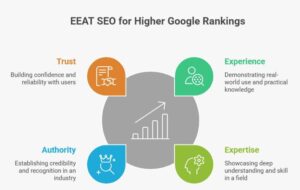
What Does EEAT Mean in SEO? (Quick Overview)
EEAT stands for:
Experience – Hands-on knowledge or real-world involvement
Expertise – Proven understanding of the subject
Authority – Being respected and trusted in the field
Trust – Being honest, accurate, and safe for users
Google brought EEAT into the mix with its Search Quality Rater Guidelines, but the system now plays a role in rankings through algorithms. This is true for content that educates, informs, or provides advice.
Why Does Google Use EEAT (in Blogs)?
Google has one main goal: to give users trustworthy content.
EEAT is super important when:
- Content teaches or gives advice.
- Topics influence decisions, learning, or viewpoints.
- Websites want to grow authority over time.
For blogs like TrendChaska, EEAT affects:
- How steady the rankings remain
- How well sites handle search updates
- How much trust can they build in different areas?
Many of these principles overlap with modern trust signals, which are discussed in detail in our guide on powerful trust signals that boost Google rankings in 2026.
Clear EEAT SEO Examples That Rank Well on Google
1: Content Built on Personal Experience
What works:
Articles that share hands-on use, personal observations, or lessons learned.
Key EEAT features include:
- Starting phrases like “From my experience…”
- Detailed step-by-step explanations
- Visual aids like screenshots or clear examples
Why Google values it:
Personal experience helps cut down on misinformation and oversimplified content.
These are practical EEAT SEO examples where Google rewards firsthand experience over generic summaries.
For example, reviewing tools you’ve personally tested—like those in our list of beginner-friendly AI marketing tools in 2026—adds strong experience signals.
2: Showing the Author’s Expertise
What gets noticed:
Content made or checked by someone who knows the topic inside and out.
Key EEAT signs:
- Author info that shows they know the subject
- Regular posts on similar topics
- Straightforward writing that avoids unnecessary extras
Reason this works:
Google checks if the person behind the content is qualified to explain the subject well.
When multiple EEAT SEO examples point to the same trust signals, rankings tend to remain stable even during updates.
3: Becoming Trusted Through In-Depth Coverage
What gets visibility:
Websites that group similar articles instead of random pieces.
EEAT clues:
- Connected topics through links
- Categories that are easy to navigate
- Content that stays focused on one area
Why Google appreciates this:
A website gains more authority by consistently focusing on a specific area.
4: Building Trust Through Content Signals
What Google values:
Content that feels reliable, precise, and open.
Ways to build trust:
- Use a neutral style without overstatements.
- Provide sources whenever required.
- Display current timestamps.
As search evolves, AI-assisted workflows also need strong human oversight, which we explain in AI-powered SEO and content writing rules for 2026.
5: Easy-to-Read Formats That Enhance User Experience
What Google values:
Well-structured and user-friendly content made with people in mind.
EEAT UX Elements to Enhance Trust
- Use clear headings
- Incorporate bullet points
- Address FAQs with real answers.
Google views satisfied users as a key indicator of trust.
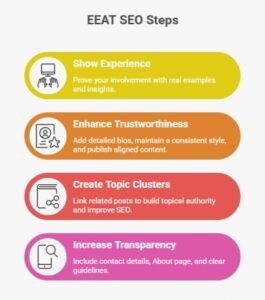
Steps to Boost EEAT SEO on Your Blog
1: Show Experience Where You Can
Don’t just tell readers—prove you’ve been involved.
2: Enhance Author Trustworthiness
Add author bios, ensure consistent writing style, and align with expertise.
3: Create Topic Clusters
Link posts to other related articles for better support.
4: Increase Transparency
Include contact details, about sections, and provide clear editing rules.
Ready to Dive Deeper?
To grow your site’s lasting organic reach, you need EEAT as a key part of your foundation. Check out TrendChaska’s detailed SEO and content strategy resources to build your site’s authority over time.
FAQ
1. What does EEAT SEO look like in action?
EEAT SEO shows real-life examples of content that reflect experience, expertise, authority, and trust. It helps Google judge the quality of your content.
2. Can EEAT change Google rankings?
EEAT is not a direct ranking factor. However, it has a big role in how Google’s system evaluates quality signals.
3. Does EEAT matter for blogs outside of YMYL topics?
Yes, EEAT plays a role in all kinds of informational content. It’s crucial for blogs that aim to establish authority.
4. How do smaller blogs boost their EEAT?
Smaller blogs can build EEAT by sharing their experience, creating in-depth content, organizing topics well, and being open with their audience.
5. Does Google reward real experience in EEAT SEO examples?
Yes. Content that reflects firsthand usage, testing, or observation consistently performs better than rewritten summaries, especially after core updates.

Nidhi Patel is an SEO and digital marketing content strategist focused on AI SEO, content marketing, blogging, and personal branding. Through TrendChaska, she shares practical digital marketing insights, SEO strategies, and AI tools for beginners, students, and small businesses in India.