
Find out how AI tools can help bloggers make tasks like research, writing, and SEO easier. Learn useful tips to create great blog posts more .
Introduction
Blogging is no longer about writing well. Bloggers now need to research topics, optimize search engine rankings, format articles, create visuals, and share posts across various platforms. Doing all this alone can feel exhausting.
AI workflows are changing how bloggers get their work done. Bloggers aren’t just using AI here and there; they are setting up well-organized systems. These setups mix different AI tools to boost research, make better-quality content, and stick to a regular publishing schedule.
To learn about these workflows is key to increasing productivity. Students, marketers, and solo bloggers may find that structured AI use helps them work faster without lowering the quality of what they create.
This guide explains how AI workflows are applied by bloggers in creating content, and steps to build your own smart workflow.
What Are AI Workflows for Bloggers?
An AI workflow is a clear process that uses artificial intelligence tools to help at different steps of making content.
Instead of using AI just for one task, bloggers now link together different steps, making the whole process of publishing faster and smoother.
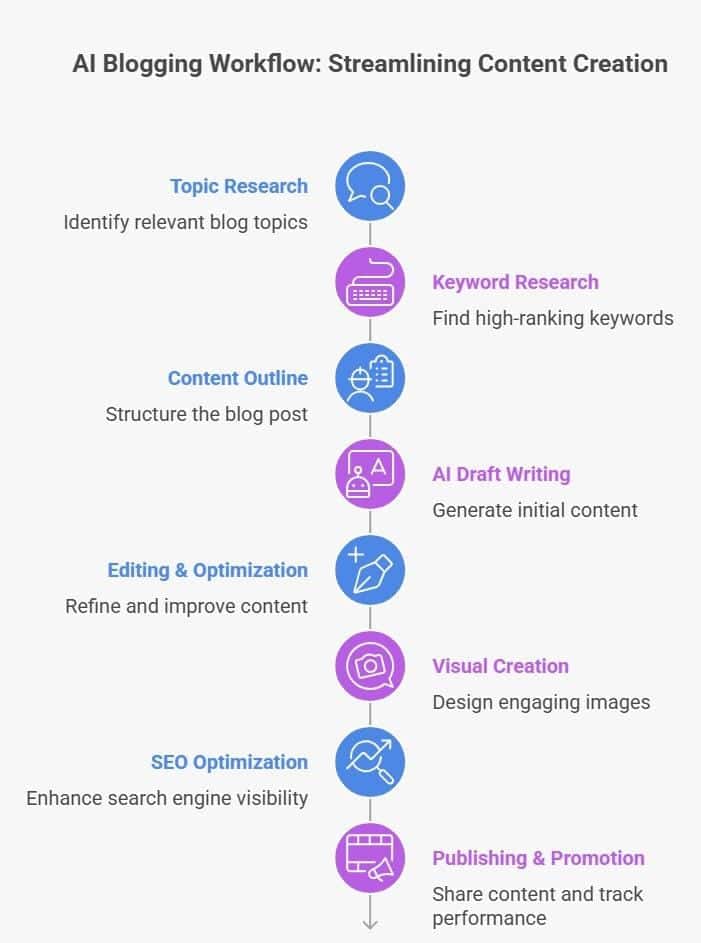
Here’s what a normal blogging routine includes:
- Researching topics
- Analyzing keywords
- Creating outlines
- Writing drafts
- Optimizing for SEO
- Improving edits and readability
- Making visuals
- Sharing content
AI tools can either speed up or automate a lot of these tasks.
The idea isn’t about replacing human creativity. It’s about helping bloggers act faster with smarter, data-backed tools.
Why More Bloggers Turn to AI
The blogging world has become much more competitive than before. Search engines favor content that is useful and credible, so bloggers need to write high-quality posts more often.
AI systems allow them to meet this challenge more effectively.
Main perks include:
1. Quicker research
Bloggers can use AI tools to review loads of information, helping them get a clear grasp of a subject before starting to write.
2. Better content organization
AI outlining tools help break down ideas into sections that are easier to follow and more reader-friendly.
3. Stronger SEO focus
Modern AI writing assistants check keyword use, clarity, and structure to boost a blog’s chances of ranking higher in search results.
4. Steady publishing routine
Having a structured system cuts down on the time it takes to create articles, making it simpler to stick to a consistent posting schedule.
To rank well, bloggers managing authority sites like TrendChaska need to focus on both quality and consistency.
Key Parts of an AI-driven Blogging Process
To see how AI blogging processes work, it helps to divide them into clear steps.
1. Researching Topics and Finding Trends
Choosing the right topic comes first when starting a blog.
AI tools study search behaviors, popular trends, and what people are looking for.
Bloggers often rely on AI to:
- Find ideas that are gaining popularity.
- Uncover common questions users ask online.
- Check for missing content in search results.
- Group related ideas into manageable clusters
These tools ensure blogs match what people are searching for, avoiding random topics.
For instance, knowing the latest SEO trends allows bloggers to plan content calendars with better focus.
2. Keywords and Understanding Search Intent
After picking a topic, keyword research becomes the next key step.
AI tools assess:
- Main keyword challenges
- Connected long-tail keywords
- Purpose behind user searches
- Connections in semantic keywords
For instance, when aiming for AI workflows for bloggers, related terms could involve:
- AI tools helping bloggers
- Automated blogging systems
- Workflow automation with AI
- Tools for automating blogging
- Writing assistants powered by AI
- Automated workflows for content
- AI-driven SEO-friendly content
- Productivity tools made for bloggers
Using these terms allows search engines to get a clearer picture of the overall content focus.
To understand how AI is transforming SEO content strategies, read our guide on AI-powered SEO content writing in 2026.
3. Generating a Content Outline
Creating a solid outline plays a big role in making good-quality content.
AI tools often help build structured outlines by looking at search intent and popular pages online.
An AI-made outline includes things like:
- Main topic sections
- Questions readers often ask.
- Headings designed to boost SEO
- Subtopics that add more depth
But skilled bloggers often go back and tweak these outlines by hand. They do this to make sure the article fits both its goals and the target readers.
Mixing automation with personal editing is key to keeping content genuine.
4. Using AI to Draft Content
After finishing the outline, AI writing tools assist in creating a first draft.
These tools give bloggers a helping hand.
- Turn key ideas into complete paragraphs.
- Make the writing clearer and easier to understand.
- Keep the tone uniform throughout.
- Avoid getting stuck while writing.
Writers should always review and edit anything created by AI.
Search engines like Google focus on content that comes with real-life experiences and provides value. This is why bloggers should try to include:
- Their own experiences
- Specific examples
- Context from the real world
AI tools should assist writers, not take the place of human skills or knowledge.
If you’re new to AI tools, you can explore our curated list of the best beginner-friendly AI marketing tools to get started.
5. Editing to Make Content Clearer
Every draft, no matter how good, needs editing to improve.
AI editing tools help refine:
- Grammar and spelling errors
- Simpler and clearer sentences
- How readable the text is
- Better paragraph flow
These tools are helpful to help new bloggers write polished and professional posts.
Improving readability helps people stay interested in the content and lowers the number of visitors leaving your blog.
6. Creating Visual Content
Including pictures, graphics, and visual aids makes blogs more engaging and easier to understand.
With AI tools, bloggers can now make:
- Blog artwork
- Charts and graphs
- Header images
- Social media visuals
Using visuals not only makes content more enjoyable but also boosts the likelihood that people will share it.
7. SEO Optimization and Posting
Bloggers usually rely on AI SEO tools to finalize their posts before they go live. These tools help check:
- Where keywords are placed
- How well headings are organized
- Chances to add internal links
- Titles and descriptions
SEO tools like Moz and HubSpot often share studies about how organizing content and keeping it relevant affects search rankings.
Using these steps lets bloggers match their posts to what search engines look for today.
A Simple Blogging Plan Using AI
Here’s an easy plan that lots of bloggers use:
1. Find a topic
AI tools help spot popular blogging trends.
2. Analyze keywords
Pick the main keyword and related search terms.
3. Build an outline
Plan the structure of your blog based on what readers might search for.
4. Write the draft
Get help from AI to create a first version of the post.
5. Make edits
Edit to make the text clearer, include examples, and adjust the tone.
6. Optimize for SEO
Review where keywords appear and add internal links.
7. Create visuals
Make graphics and key images to support the content.
8. Publish and share
Distribute your work through platforms like newsletters and social media.
Improving this process over time can help bloggers post more quickly while keeping the content high-quality.
Tips for Using AI in Blogging
AI tools are powerful, but bloggers must use them .
Prioritize quality, not just speed
Posting is nice, but keeping the content good is more important.
Check AI-generated content
AI might mess up facts or context, so a person needs to double-check.
Add your own ideas
Using real-life examples, experiences, or studies makes the blog more trustworthy.
Keep a steady tone of voice.
Audiences prefer blogs that feel personal over ones that seem machine-made.
Using these methods helps AI boost efficiency while keeping trust intact.
Conclusion
AI is changing how bloggers create, organize, and fine-tune their work. It doesn’t replace human creativity. Instead, AI workflows for bloggers work as tools to handle routine tasks and boost productivity.
By using these tools wisely, bloggers can spend less time managing technical details and more time diving into big ideas and telling stories that matter.
To build authoritative websites, content creators can use a well-organized AI workflow. This approach helps them publish , align better with SEO goals, and keep readers more engaged.
Explore More on TrendChaska
Want to learn how AI is changing modern blogging and marketing? These guides could be helpful:
TrendChaska shares useful tips on SEO, AI tools, and digital marketing trends. These insights aim to help students, professionals, and creators stay ahead in the ever-changing world of content creation.