
Keyword research kya hai? Learn with free tools, Indian examples, and simple steps to improve your Google rankings.
Keyword Research Kya Hai? Ek Easy Explanation Indian Beginners Ke Liye
Socho tumne ek blog shuru kar liya. Poora effort daal kar tumne articles likhna start kar diya. Par Google pe traffic abhi bhi zero hai. Annoying lag raha hai na?
Aksar naye bloggers ek badi galti karte hain: woh content toh likte hain par ye sochna bhool jaate hain — log search kya kar rahe hain? Yahin par keyword research kya hai samajhna sabse zaroori ho jaata hai, jo tumhe ek word likhne se pehle karna chahiye.
Iss guide mein sab kuch bohot simple tareeke se explain karenge — Hinglish examples Indian context aur bilkul no complicated shabd. Chalo, shuru karte hain!
Keyword Research Kya Hai? (Bilkul Simple Samjho)
Keyword research kya hota hai? — Simple words mein: ye process hai jisme aap yeh jaan pate ho ki log Google pe kisi cheez ko search karte waqt kaunse words aur phrases type karte hain.
Samajhne ke liye ek example le lo. Maan lo aapka ek dost mobile ki shop shuru karna chahta hai. Shuru karne se pehle woh aas-pas ke logon se puchhta hai, “bhai log kaunsa mobile chahte hain yahaan?” Yehi keyword research hai, bas Google searches ke liye.
Example:
Jaipur ka ek aadmi Google pe type karta hai “best phone under 15000 with good camera.” Yehi poora phrase ek keyword hai. Agar aapki blog ya product page iss phrase ko target karega, toh free mein aapki site us buyer ke saamne aa sakti hai!
Finding the right keywords lets you see what your audience wants, helping you create content that appears when they search online.
Now that you know what keyword research is, let’s see why it’s crucial for your blog or business.
Keyword research ke bina likhna aisa hai jaise andhere mein teer maar rahe ho. Shayad kuch hit ho, par zyada koshish bekaar jayegi.
Here’s why it’s so important:
- Increase website visitors: Using the right keywords helps your target audience find you.
- Boost Google rankings: Google favors pages that align well with user searches.
- Know your audience better: Keywords reveal the exact problems your readers face.
- Outshine competitors: Clever keyword research helps you rank where larger websites overlook.
- Drive more sales: A seller on Amazon India focusing on “best mixer grinder under 2000” attracts more buyers than one who targets “mixer grinder.”
Keyword Types: Short-tail vs. Long-tail
Keywords are not all alike. You need to understand the two primary types.
1. Short-tail Keywords (Broad)
Short searches involve one or two words. For example: “phone” “laptop” “shoes.”
What’s the problem? Millions of sites fight over these same keywords. Beginners? You should stay away. Ranking here is hard.
2. Long-tail Keywords India (Your New Bestie)
Longer, more detailed phrases make up long-tail keywords. For instance: “best phone under 15000 for students in India.”
Long-tail keywords in India work great for beginners because:
- They face less competition, so it’s easier to rank.
- They show clear search intent. The person knows what they’re after.
- They lead to higher chances of a sale. A user searching “Flipkart kurti under 500 cotton” is already serious about buying.
Quick Tip:
Focus on low-competition keywords when getting started. A keyword with 1,000 searches each month and minimal competition is far more effective than one with 100,000 searches controlled by giants like Nike or Amazon.
Step-by-Step Guide to Do Keyword Research for Beginners
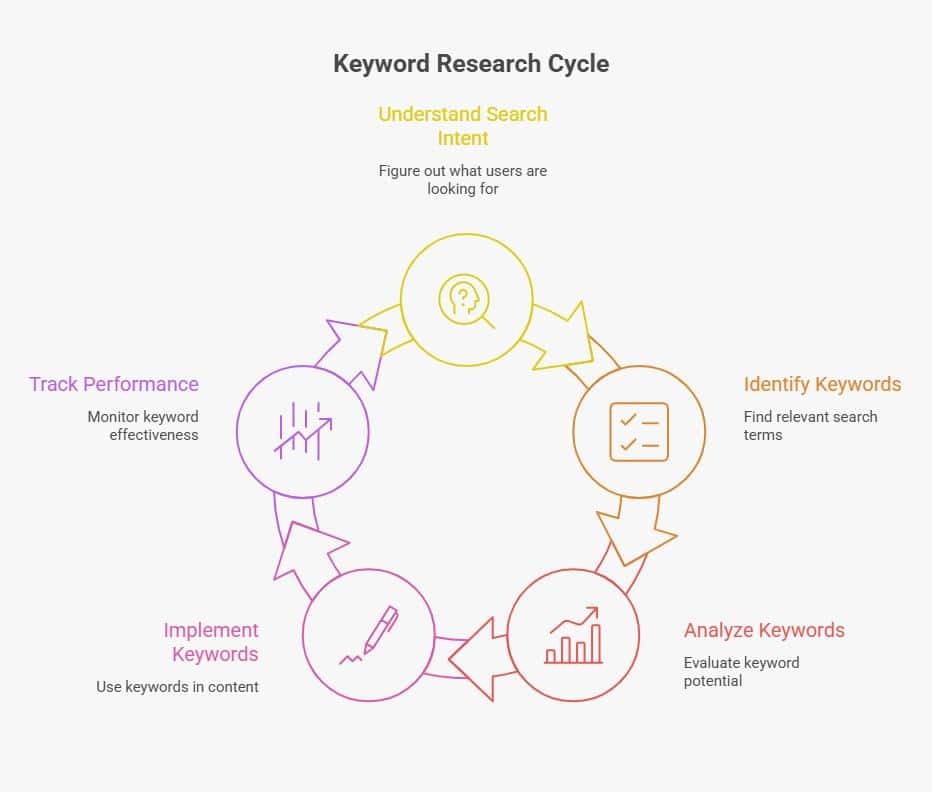
- Start by brainstorming your topic. Make a list of 5 to 10 things people you want to reach might search online. If you run a tiffin service in Pune, think of phrases like “home tiffin Pune,” “budget tiffin service near me,” or “nutritious lunch delivery Pune.”
- Use a free keyword tool. Enter one of your main ideas into the tool (more details on tools later). The tool will give you similar keywords, how often people search for them every month, and how tough it is to rank for them.
- Focus on low competition keywords. Pick keywords that have a good search volume somewhere between 500 and 5,000 each month but aren’t too competitive. These will be your best options.
- Look at existing rankings. Search your selected keywords on Google. If the top results are dominated by large news outlets or major e-commerce websites, it’s best to skip those. If smaller websites or individual blogs appear, you have a chance to compete.
- Select your main keywords and start writing. Pick one main keyword along with two to three related ones. Work these into your article in a natural way.
Free Tools for Keyword Research (Works Well in India)
Chalo baat karte hain free keyword research tools jo India mein kaam aate hain ke baare mein. Aapko shuruaat karne ke liye paise kharch karne ki zarurat nahi hai.
Tool: What it does
Google Keyword Planner India Most Popular
This is the classic go-to free tool. It provides actual search volumes for Indian users. You just need to set the location to India and choose Hindi or English as the language. A free Google Ads account is necessary to access this tool.
Ubersuggest Beginner Friendly
You can enter any keyword to discover tons of long-tail keyword ideas, content suggestions, and competition levels. There’s a free plan that covers most of what beginners need to get started.
Google Search itself Fast & Free
Just type your keyword, and look at the “People also ask” sections or the autocomplete suggestions. These come straight from what Indian users are searching for. It’s 100% free and doesn’t require signing up.
AnswerThePublic Hidden Gem
This tool uncovers questions that people ask about any subject. Ideal to discover long-tail keywords in an Indian style. It helps uncover what, how, and why questions that work well as blog post ideas! Please provide the content you’d like me to rewrite, and I’ll follow the instructions to craft a rewritten version.
Google Keyword Planner India — Getting Started:
Visit ads.google.com > Select Tools > Open Keyword Planner > Click “Discover new keywords” > Enter your topic > Choose India as the location > That’s it! You’ll find search volumes, competition levels, and keyword suggestions specific to the Indian market.
Mistakes Beginners Often Make
- Choosing generic keywords — Using “laptop” instead of “best laptop under 40000 suitable for college students in India.”
- Overloading with keywords — Adding the same keyword 20 times in a forced way. Google punishes this. Write content that people enjoy reading.
- Not thinking about searcher’s needs — If someone asks “keyword research kya hai,” they need a clear explanation, not shopping suggestions. Align your content with their actual goal.
- Skipping keyword research — This is the main reason new blogs fail to attract any visitors. Always make this a priority step.
- Focusing on English keywords, India has over 500 million users who browse in Hindi. Exploring Hindi keywords could bring huge traffic opportunities.
Simple Advice to Get Started
- Begin with long-tail keywords that have low competition to build trust before aiming for tough ones.
- Use Google Keyword Planner India. Set the location to India and include specific cities to get detailed local keyword results.
- Place your main keyword in the title, the opening lines of one of the subheadings, and at the end.
- Try mixing in bilingual searches. Terms like “ghar ka khana delivery” or “saree under 1000 online” are examples of real searches in India with less competition.
- Use Google’s “People Also Ask” section to find quick ideas for researching Hindi and other regional language keywords.
- Fine-tune your keyword plan every couple of months. Trends shift, so stay prepared!
Looking to Get More Advanced? Start Here
Researching keywords is part of the process. To rank well on Google, you must see the bigger picture. Check out our full SEO Guide for Beginners India to learn about on-page SEO, building backlinks, content planning, and all the tools you need to improve your ranking.
Conclusion
Ab samajh aaya? Keyword research kya hota hai? Yeh koi rocket science nahi hai, aur na hi sirf badi companies ka ek khaas fundaa. Yeh toh bas dusron ki baatein sunne jaisa hai — unki zarurat samajh ke unko wahi cheez dena jo wo chahte hain.
Shuruaat karo aaj hi. Google Keyword Planner kholo, apna topic daalo, 3 low competition keywords dhundo, aur apna pehla optimized article likho. Bas itna hi. Chhote chhote kadam uthao — yahi hai asli success ka raasta.
Jo bade bloggers hain, woh bhi kabhi beginners hi the.
Ab tumhari baari hai!
FAQ — Hindi me Keyword Research aur Zyada
Q: Hindi me keyword research kya hai?
Keyword research ka matlab hota hai yeh samajhna ki log Google pe kya search kar rahe hain. Jab aap apne blog ya website ke liye likhne ka plan banate ho, usse pehle yeh jaana zaroori hai ki aapke target audience kaunse words aur phrases type karte hain. Is process ko keyword research bola jata hai. Yeh karne se aapka content unhi logon tak pahunchega jo usse dekhna chahte hain.
Q: India mein free keyword research tools kaunse hain?
India ke shuruaati logon ke liye kuch behtareen free keyword research tools hain: (1) Google Keyword Planner — use karte waqt location India pe rakhna, (2) Ubersuggest — iska free plan ek din mein limited searches allow karta hai, (3) Google Autocomplete aur “People Also Ask” — yeh dono bilkul free hote hain, (4) AnswerThePublic — sawal-jawaab wale long-tail keywords dhundhne ke liye perfect hai. Yeh tools pehle try karo, premium tools ka time baad mein aayega!
Q: India mein long-tail keywords ka itna mahatva kyun hai?
India mein long-tail keywords is wajah se zaruri hain kyunki yahaan ke internet users bahut specific searches karte hain. Jaise, “affordable CA classes in Mumbai for 12th pass” ya “best moisturizer for oily skin under 200 rupees.” Aise searches ka competition kam hota hai, par intent bilkul clear hoti hai. Matlab, jo banda yeh search kar raha hai usko wahi cheez chahiye jo usne type ki hai.
Q: Ek article mein keyword kitni baar dalna chahiye?
Write a ~1000-word article and include the main keyword 4 to 6 times . Use it in the title, the first paragraph, one heading, and the conclusion. Keep the keyword density between 1% and 1.5%. Avoid overusing it since Google penalizes keyword stuffing. Your content should feel natural and reader-friendly while being optimized for search engines.
Published on TrendChaska.com

Nidhi Patel is an SEO and digital marketing content strategist focused on AI SEO, content marketing, blogging, and personal branding. Through TrendChaska, she shares practical digital marketing insights, SEO strategies, and AI tools for beginners, students, and small businesses in India.